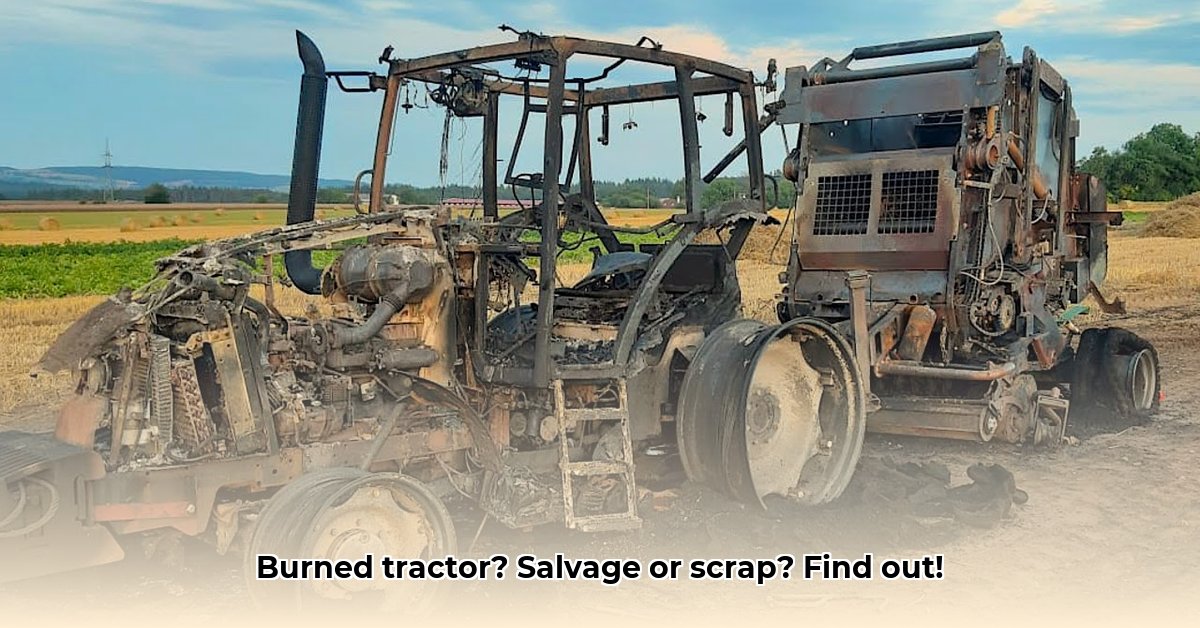
Assessing the Damage: A Step-by-Step Investigation
A fire-damaged tractor presents a complex decision: repair or replace? This guide provides a structured approach to evaluating the damage and making an informed choice. Remember, thorough documentation (photos and videos) is crucial throughout this process, especially for insurance claims. For finding replacement parts, check out this helpful resource: 3-point hitch parts.
Step 1: Initial Visual Inspection
Begin with a comprehensive visual assessment. Photograph the tractor from all angles, focusing on key components: engine, transmission, hydraulics, electrical system, and frame. Note any visible damage – bent metal, melted plastic, or burned wiring. This initial survey helps you prioritize further investigation.
Step 2: Detailed Component Examination
This step requires a closer look at each major system:
- Engine: Check for cracks in the engine block, warped cylinder heads, or melted components. Severe engine damage often renders repair uneconomical.
- Transmission: Assess for external damage. Internal damage typically requires a professional inspection, as it's difficult to fully evaluate without disassembly.
- Hydraulics: Inspect hydraulic lines for leaks or damage. Compromised hydraulic lines can lead to significant repair costs and potential safety hazards.
- Electrical System: Fire damage frequently affects the electrical system. Carefully examine wiring harnesses, connectors, and components for burns or melting. Even seemingly minor damage can cause extensive electrical problems.
- Frame: Evaluate the tractor's frame for bends or twists. Significant frame damage can make repair impractical and very expensive.
Step 3: Professional Assessment
Obtain multiple repair estimates from reputable agricultural equipment repair shops. These estimates should itemize the necessary repairs and provide realistic cost projections. Inquire about part availability, as sourcing parts for older tractors can present challenges.
Step 4: Determining Scrap Value
If repair estimates exceed the tractor's potential value, contact salvage yards specializing in agricultural equipment. They'll assess the salvage value of the tractor as a whole or individual parts. They may be interested in specific components even if the entire tractor is beyond repair.
Repair or Replacement: A Cost-Benefit Analysis
The decision hinges on a thorough cost-benefit analysis. Compare repair costs with the market value of a comparable used tractor. If repair costs significantly exceed replacement costs, replacing is often the more prudent option.
Repairing Your Tractor: Advantages
- Sentimental Value: Maintaining a familiar piece of equipment can be important for many farmers.
- Potential Cost Savings: In some cases, repair costs may be lower than acquiring a replacement.
- Familiarity: You know your tractor's operating characteristics and quirks.
Repairing Your Tractor: Disadvantages
- High Costs: Repairs can be exceptionally expensive and time-consuming.
- Uncertainty: Repair success isn't guaranteed, and additional unforeseen issues may arise.
- Downtime: Repairs cause downtime, resulting in lost productivity and potential income loss. Is this downtime cost acceptable?
Replacing Your Tractor: Advantages
- Reliability: A new or used tractor provides a greater degree of reliability and reduced risk of unexpected breakdowns.
- Reduced Downtime: You can resume operations faster.
- Peace of Mind: Eliminate concerns about hidden damage and recurring repair issues.
Replacing Your Tractor: Disadvantages
- High Upfront Cost: Replacement carries a higher initial financial outlay.
- Finding a Suitable Replacement: Locating a suitable replacement may require significant time and effort. Will search cost and time loss be less than repair cost and downtime?
Insurance and Salvage: Navigating the Process
Comprehensive documentation is essential when dealing with your insurance company and salvage yards. Thoroughly document the damage with photos, videos, and repair estimates to support your claim. Salvage yards can be valuable resources, offering opportunities to sell the tractor for parts or to source needed components.
Remember to dispose of hazardous materials such as fluids and batteries according to local regulations. Safe and environmentally responsible disposal is crucial.
Sample Cost Analysis (Estimates Only)
The following table provides illustrative cost estimates. Obtain actual quotes from repair shops and salvage yards to tailor this information to your specific situation.
| Item | Repair Cost Estimate (Range) | Replacement Cost Estimate (Range) |
|---|---|---|
| Engine | \$2,000 - \$8,000 | \$5,000 - \$15,000 |
| Transmission | \$1,500 - \$5,000 | \$3,000 - \$10,000 |
| Hydraulic System | \$1,000 - \$4,000 | \$2,000 - \$7,000 |
| Electrical System | \$500 - \$2,000 | \$1,000 - \$4,000 |
| Bodywork & Other Repairs | \$500 - \$3,000 | N/A |
| Total Estimated Cost | \$5,500 - \$22,000 | \$11,000 - \$36,000 |
This guide provides a framework. Consult with agricultural equipment professionals for personalized guidance. Careful planning and a methodical approach will aid in making the best decision for your situation.